
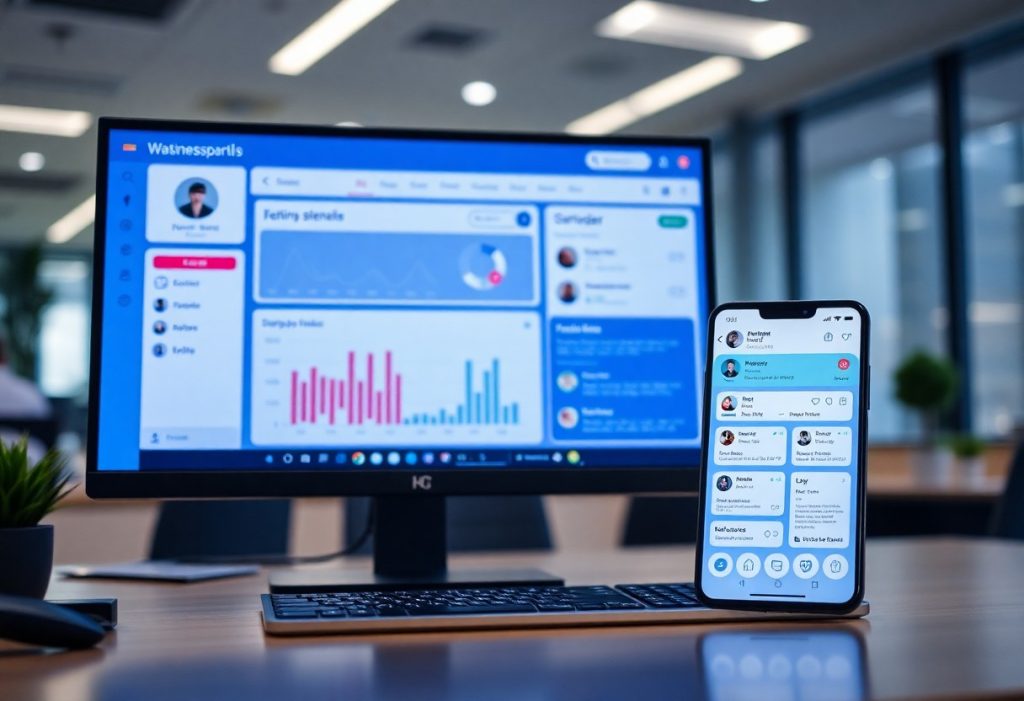
Business portals shape how your team accesses tools, data, and collaboration spaces, directly influencing daily efficiency. You rely on these platforms to reduce friction in workflows, connect departments, and maintain security across roles. A well-structured portal acts as a central hub, not just a collection of links. You expect immediate access to documents, real-time updates, and intuitive navigation tailored to different user needs. Every feature must serve a clear purpose aligned with operational demands.
Key Takeaways:
- A centralized access point streamlines user experience by consolidating tools, documents, and workflows into one secure location, reducing time spent switching between platforms-for example, a mid-sized SaaS firm reported a 30% drop in onboarding time after implementing unified login across departments.
- Integrated self-service support, such as searchable knowledge bases and automated ticketing, reduces repetitive inquiries and accelerates resolution times, with some organizations seeing over half of user issues resolved without agent involvement.
- Role-based permissions ensure data integrity and compliance by restricting access according to job function, a practice adopted by financial institutions to meet regulatory standards while maintaining operational efficiency.
The Single Gateway
One Key for All Doors
Accessing multiple systems with separate logins slows productivity and increases frustration. A unified authentication system lets you enter once and move freely across integrated tools. Single sign-on (SSO) eliminates password fatigue while strengthening security through centralized control. You authenticate once, then gain access to HR, finance, project management, and customer databases without re-entering credentials.
Major platforms like Microsoft Azure AD and Okta support this model, allowing you to manage user permissions at scale. Employees in remote or hybrid roles benefit most, spending less time troubleshooting access and more time completing tasks. Your IT team can revoke access instantly when roles change, reducing exposure from outdated permissions.
The Open Field
Legacy portals often lock data behind rigid structures, limiting how you interact with information. An open architecture removes these barriers, enabling you to pull data from different departments into custom views. You might combine sales figures with support tickets to assess customer health in real time.
This flexibility supports integrations with third-party tools through APIs, letting you extend functionality without rebuilding the core system. A mid-sized SaaS firm could connect its billing platform to the portal, giving customer success teams immediate insight into subscription changes.
Open systems allow you to adapt the portal as business needs shift, incorporating new data sources or workflows without dependency on a single vendor. You maintain control over how information flows, ensuring the portal evolves alongside your operations rather than constraining them.
The Book of Answers
Finding the Truth
Employees often waste hours searching for outdated policies or conflicting instructions buried in email threads. A well-structured knowledge base centralizes accurate, up-to-date information, reducing confusion and repeated inquiries. You can guide teams to self-service solutions with clearly categorized articles, searchable tags, and version-controlled documents.
One mid-sized SaaS firm reduced internal support tickets by nearly half after implementing a centralized FAQ system with role-based access. You benefit not only from faster resolution times but also from consistent communication across departments and locations.
Fixing the Break
When a process fails, your team needs more than just a description of the problem. The portal must include troubleshooting workflows, escalation paths, and links to relevant tools or contacts. You streamline recovery by embedding step-by-step guides directly within affected modules.
Support documentation integrated at the point of failure cuts resolution time and reduces dependency on IT or HR intermediaries.
A manufacturing company embedded repair checklists into their portal’s maintenance module, allowing floor supervisors to resolve equipment delays without leaving the interface. You replicate this efficiency by aligning solutions with real-time operational contexts, ensuring fixes are immediate and actionable.

The Stone Wall
Security forms the foundation of any trusted business portal, acting as the first line of defense against unauthorized access. You must ensure every entry point is fortified with reliable authentication protocols. For deeper insights into building secure customer-facing platforms, explore 5 Key Elements of a Great Customer Portal, which outlines practical strategies used by leading organizations.
The Right to Enter
Authentication begins with verifying user identity through secure login methods. You can implement multi-factor authentication to reduce the risk of compromised credentials. A mid-sized SaaS firm, for example, reduced account takeovers by requiring both password and time-based codes. Access should never rely solely on static passwords, especially when sensitive data is involved.
Guarding the Vault
Once inside, users should only see data and functions relevant to their role. You enforce this through role-based access controls that limit permissions based on job function. A customer service representative might view order histories, but not financial reports. These restrictions prevent accidental or malicious exposure of critical systems.
Encryption plays a central role in protecting data both in transit and at rest. You apply industry-standard protocols to ensure that even if data is intercepted, it remains unreadable. Regular security audits and automated monitoring further strengthen these protections, identifying vulnerabilities before exploitation.
The Common Room
Every business portal benefits from a central space where teams converge informally. This area supports spontaneous collaboration, mimicking the dynamics of a physical office common room. You can share updates, celebrate milestones, or post casual announcements that strengthen team cohesion. A mid-sized SaaS firm reported higher engagement after introducing such a space, with employees contributing weekly.
Shared Work
Collaborative projects thrive when team members access shared documents in real time. You can co-edit reports, track changes, and leave contextual comments without switching platforms. Permissions ensure only authorized personnel modify sensitive files, while version history preserves accountability.
Integration with task management tools allows assignments to flow directly from discussion threads. You receive automatic notifications when a collaborator updates a file, reducing delays in project timelines.
The Short Word
Brief, timely messages keep teams aligned without overwhelming inboxes. You can send quick status updates, urgent alerts, or simple acknowledgments through dedicated micro-messaging channels. These snippets reduce meeting load by resolving minor queries instantly.
Messages are searchable and tied to relevant projects, ensuring context isn’t lost. You can pin critical updates for visibility, and mute non-necessary threads to maintain focus during deep work periods.
Using short messages effectively means adopting concise language and clear intent. You might replace a five-line email with a two-line alert that links to a task, cutting response time significantly. Teams that standardize brevity rules report fewer miscommunications and faster decision cycles.
Room to Grow
Scaling your business portal should not require a system overhaul. Your platform must accommodate new departments, increased user loads, and expanded functionality without performance lag. A mid-sized SaaS firm might double its team in 18 months, demanding immediate access provisioning and role-based permissions that adapt without manual reconfiguration.
Building Out
Integration capabilities define how easily you can add new tools. Your portal should support APIs that connect to CRM, HR software, and analytics platforms. Without this flexibility, teams resort to workarounds that compromise data integrity and security.
The Company Colors
Branding within the portal reinforces internal identity and trust. You can embed logos, standard fonts, and color schemes so employees recognize the environment as authentically yours. This consistency extends to email notifications and document templates generated within the system.
A recognizable interface reduces cognitive load. When dashboards and forms reflect your brand’s visual language, users process information faster and report higher confidence in the system’s legitimacy. This is especially effective during onboarding, where familiarity accelerates adoption.
The Small Screen
Work on the Move
Mobile access ensures you stay connected when away from the desk, whether at a client site or traveling between locations. A responsive portal adapts to screen size without sacrificing functionality, letting you approve requests or check project updates from a smartphone.
Field service teams at a mid-sized logistics company reduced response delays by accessing work orders and customer data through their portal on tablets. You can view real-time inventory levels, update job statuses, or message team members without returning to the office.
Fast Delivery
Speed matters when completing tasks under tight deadlines. A portal optimized for performance loads pages quickly, even with large datasets or multiple open tabs.
You expect immediate access to documents, dashboards, and communication tools. A slow interface disrupts focus and reduces daily productivity, especially during peak usage hours.
One regional accounting firm reported fewer dropped connections and faster report generation after switching to a lightweight portal interface with deferred loading for non-imperative elements. You benefit from near-instant search results and minimal lag when switching between modules, maintaining momentum throughout the workday.
Summing up
Your business portal must act as a unified entry point, giving employees immediate access to tools, documents, and internal systems without redundant logins. You benefit from centralized navigation, role-based permissions, and real-time updates that reflect current workflows across departments.
Integrate searchable knowledge bases, collaboration hubs, and mobile-responsive designs to meet users where they work. A mid-sized SaaS firm improved adoption by 40% after embedding live chat support and personalized dashboards directly into their portal interface.
FAQ
Q: Why is role-based access control imperative in a business portal?
A: Role-based access control ensures employees interact only with data and tools relevant to their responsibilities, reducing the risk of accidental changes or data exposure. A marketing coordinator, for example, can view campaign analytics but cannot access payroll modules reserved for HR staff. This structured permission model supports compliance with internal policies and external regulations such as GDPR or HIPAA, particularly in industries handling sensitive personal information. Implementation typically involves defining user roles during onboarding and aligning system permissions to job functions, which scales efficiently as teams grow.
Q: How does integrated communication functionality improve user engagement?
A: Portals that embed messaging, announcements, or team chat reduce reliance on external email or standalone apps, keeping conversations tied to relevant projects or records. A mid-sized SaaS firm reported higher adoption rates after adding an internal notification feed that alerts users to task updates or policy changes. When team members receive real-time updates within the portal, response times improve and information stays centralized. Notifications can be customized by preference, such as pop-ups or email digests, ensuring critical messages are not missed without overwhelming users.
Q: What makes document management a core feature of effective business portals?
A: A centralized document repository eliminates scattered files across personal drives and enables version tracking, audit trails, and shared access with controlled permissions. Employees can retrieve the latest contract template or compliance manual without requesting it from another department. Some organizations use metadata tagging and full-text search to locate files quickly, reducing time spent on administrative tasks. One manufacturing company reduced onboarding time by two days after consolidating training materials, safety protocols, and equipment manuals in a searchable portal library.