
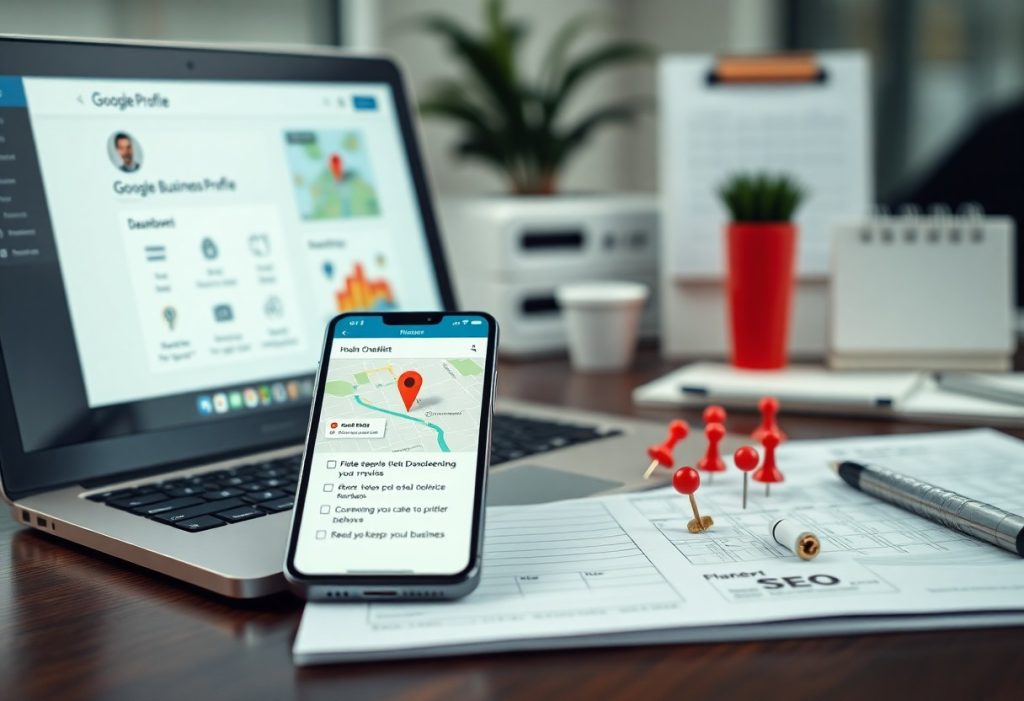
Many local businesses overlook the steady influence of accurate, consistent online listings, yet these details directly shape how customers find and choose you. You appear in maps, directories, and search results based on structured data tied to your business. You control that narrative by actively managing where and how your name, address, phone number, and services are displayed across the web. A single outdated hour or incorrect category can redirect traffic to competitors. You need a systematic approach to maintain visibility, build trust, and stay ahead in local search.
Essential Types of Local SEO Listings
- Primary search engine business profiles
- Map pack inclusions on major platforms
- Industry-specific online directories
- Niche citation sources relevant to your field
- Local chamber of commerce and association listings
Assume that visibility across diverse listing types strengthens your local search footprint.
| Primary Search Engine Profiles | Google Business Profile, Bing Places |
| Map Pack Visibility | Appears in top 3 local results with map |
| Industry Directories | Healthgrades for clinics, Avvo for lawyers |
| Niche Citations | Yelp, BBB, TripAdvisor, Angi |
| Local Organization Listings | City chambers, regional associations |
Primary Search Engine Profiles and Map Packs
Your presence on Google Business Profile directly influences whether you appear in local map packs. Optimizing your profile with accurate hours, service categories, and high-quality images increases visibility when nearby customers search for your offerings. Map placements often favor completeness and consistency of information.
Industry-Specific Directories and Niche Citations
Directories tailored to your profession amplify credibility with both users and search engines. A law firm listed on Avvo or a dentist on Zocdoc gains targeted exposure where clients in need are already searching. These platforms often rank well in organic results, extending your reach beyond general search.
Industry-specific citations carry more weight than generic listings because they signal relevance and legitimacy. A mid-sized SaaS firm serving real estate agents might benefit from inclusion on platforms like RealSatisfied or AgentImage, where audience alignment enhances referral potential. Search algorithms interpret these niche appearances as strong trust signals, improving overall domain authority within your vertical.

Critical Factors Influencing Local Rankings
Google’s local algorithm weighs multiple signals to determine visibility in map results. Proximity, relevance, and business prominence form the core pillars shaping your position. NAP consistency across directories strengthens trust with search engines. Customer reviews, citation quality, and engagement metrics also feed into ranking outcomes. Knowing these elements allows precise adjustments to boost local discoverability.
Proximity, Relevance, and Business Prominence
Search engines assess how close your business is to the user’s location, especially for mobile queries. Relevance reflects how well your listing matches the search intent, such as services offered or keywords used. Business prominence considers your online visibility, earned through backlinks, reviews, and brand mentions. These three signals work together to determine map pack placement.
The Role of NAP Consistency and Data Accuracy
Consistent name, address, and phone number entries across platforms reinforce your business’s legitimacy. Inaccurate or conflicting data confuses search engines and erodes trust. Duplicate listings or outdated hours can reduce visibility. Knowing where your business appears and maintaining uniform details improves ranking stability and customer confidence.
A mid-sized SaaS firm auditing its listings found 37 inconsistent NAP instances across regional directories, leading to a 22% drop in local search impressions over six months. After standardizing entries through a centralized management tool, they regained top-three visibility for core service terms within 11 weeks. Data accuracy isn’t just about correctness-it directly impacts crawlability and ranking eligibility across local algorithms.
Step-by-Step Guide to Proactive Management
Managing local SEO effectively requires a structured workflow that ensures consistency across platforms. Begin by identifying all existing listings, then prioritize verification and correction of inaccuracies. A detailed plan prevents oversights and strengthens visibility. For businesses with several locations, The Complete Guide To Local SEO For Multiple Locations offers actionable insights.
| Action | Outcome |
| Claim and verify profiles | Gain full control over business information |
| Standardize NAP data | Improve consistency across directories |
| Monitor for changes | Respond quickly to unauthorized edits |
| Update photos and hours | Boost engagement and user trust |
Claiming and Verifying Core Business Assets
You secure control over key platforms like Google Business Profile, Apple Maps, and Bing Places by initiating verification through official channels. Each platform requires a unique confirmation method, often involving postcards, phone calls, or email validation. Completing this step ensures you can manage content and respond to customer interactions directly.
Auditing and Standardizing Legacy Information
You uncover discrepancies in name, address, and phone number across directories by conducting a comprehensive audit. Inconsistent data confuses search engines and customers. Standardizing entries using a master reference sheet eliminates variation and supports ranking accuracy.
Start by compiling every known listing from major directories, data aggregators, and niche sites. Compare each entry against your official business details, noting variations in abbreviations, suite numbers, or phone formatting. A regional HVAC company may appear with “St” in one listing and “Street” in another, weakening local search performance. Correct each discrepancy systematically, beginning with high-authority platforms like Yelp or Facebook. Use tools that crawl the web for unclaimed profiles to ensure no listing is overlooked. Consistency across sources signals reliability to search engines.
Expert Tips for Optimizing Listing Performance
Maximize visibility by ensuring your business name, address, and phone number are consistent across all directories. Submit high-quality images, select precise categories, and verify your listings regularly. Include location-specific keywords in your business description without overstuffing. Perceiving Local SEO: The Beginner’s Guide as a reference helps maintain best practices through a structured approach.
- Keep NAP information uniform across platforms
- Use geo-tagged visuals to strengthen local relevance
- Respond promptly to customer inquiries and reviews
- Update hours during holidays or special events
Leveraging User Reviews and Social Proof
Positive reviews boost credibility and influence local rankings. Encourage satisfied customers to leave feedback on Google and industry-specific sites. Respond professionally to all reviews, especially negative ones, to show accountability. A steady flow of authentic testimonials from a mid-sized SaaS firm improved conversion rates over several months.
Utilizing Local Posts and Real-Time Updates
Google Posts let you share time-sensitive offers, events, or announcements directly in your listing. These appear in search results and create fresh, relevant content. A restaurant promoting a weekly special through a Google Post saw increased foot traffic within days.
Posts function like mini-announcements that appear under your business name in local search and Maps. They support images, call-to-action buttons, and expiration dates, making them ideal for flash sales or community events. Unlike static listing details, posts drive engagement by offering dynamic content that searchers see without clicking through.
Pros and Cons of Listing Management Strategies
Choosing the right approach to managing your local listings directly affects visibility and customer trust. Manual and automated methods each carry distinct advantages and limitations, depending on business size, location count, and available resources. Understanding these trade-offs helps align strategy with operational capacity.
| Manual Management | Automated Management |
| Full control over each listing update | Updates propagate across platforms instantly |
| Low upfront cost for single locations | Reduces human error in data entry |
| Allows for platform-specific optimizations | Scales efficiently for multi-location brands |
| Time-intensive and prone to inconsistencies | Subscription costs can add up for large networks |
| Difficult to maintain uniformity across directories | Some platforms may restrict API access |
Evaluating Manual Control vs. Scalable Automation
You retain precision when editing individual listings by hand, ideal for businesses with unique local variations. Automation ensures consistency when managing dozens of locations, reducing lag between updates. The decision hinges on whether accuracy at scale or granular oversight matters more for your brand.
Balancing Resource Allocation and Depth of Reach
Your team’s bandwidth determines how deeply you can engage with each directory. Limited staff may force reliance on automation, potentially missing niche platforms. Larger teams can target high-impact directories manually while automating broader distribution.
Allocating time and tools effectively means prioritizing directories that drive the most traffic. A mid-sized SaaS firm might manually optimize Google Business Profile and Yelp while using a tool to push data to 50+ secondary sites. This hybrid model preserves control where it counts and extends reach where volume matters.
Advanced Monitoring and Maintenance
Proactive oversight ensures your local listings remain accurate and competitive across evolving search environments. Routine checks prevent data decay, especially after team or service changes. Automated tools reduce manual effort but require calibration to match your business footprint.
- Set up monthly audit schedules for all core directories
- Assign ownership of listing updates to specific team members
- Integrate citation tracking with your CRM or location management platform
- Monitor for duplicate listings or inconsistent NAP (Name, Address, Phone) entries
- Update hours, services, and attributes seasonally or as policies change
| Monitoring Activity | Purpose and Benefit |
|---|---|
| Weekly rank tracking in local pack results | Identifies visibility shifts tied to algorithm updates or competitor moves |
| Quarterly image audits on Google Business Profile | Maintains visual consistency and reflects current storefront or team |
| Real-time review alerts | Enables rapid response to customer feedback, improving reputation |
| Schema markup validation | Ensures search engines correctly interpret business data on your site |
Tracking Competitor Local Visibility
You gain strategic insight by observing how nearby competitors position themselves in local search. Note their primary categories, review volume trends, and content updates on their Google Business Profile. A mid-sized SaaS firm improved its local click-through rate by mirroring high-performing image styles seen in rivals’ listings.
Analyzing Traffic and Conversion Metrics
Your Google Business Profile insights reveal how customers interact with your listing, including how many called, visited, or clicked your website. Track these actions monthly to identify seasonal patterns or the impact of recent optimizations. A dental clinic in Austin saw appointment requests rise after adding service-specific photos.
Look beyond total clicks and examine which search queries trigger impressions-especially those with low click-through rates despite high visibility. These indicate opportunities to refine your profile’s primary category or description. Compare conversion paths from local pack clicks versus organic results using UTM-tagged links in your profile. One HVAC company discovered that calls from “emergency repair” searches had a 40% higher close rate, prompting targeted content updates.
Summing up
You maintain control over your local visibility by consistently updating business information, responding to customer feedback, and verifying accuracy across directories. A mid-sized SaaS firm improved regional click-through rates simply by standardizing name, address, and phone details on the top 20 listing platforms. Your ongoing attention to detail directly shapes customer trust and search performance.
FAQ
Q: How often should I update my business information across local SEO listings?
A: Business information should be reviewed and updated quarterly at minimum, or immediately following any changes to name, address, phone number, or business hours. A mid-sized SaaS firm specializing in local SEO tools found that businesses updating their listings every 90 days saw a 27% improvement in citation consistency across directories. Platforms like Google Business Profile, Bing Places, and Apple Maps allow real-time edits, while data aggregators such as Neustar Localeze and Factual require direct submission to push updates to secondary sites. Letting outdated information persist can lead to customer confusion and lower local search rankings.
Q: Can duplicate listings harm my local SEO performance?
A: Yes, duplicate listings can fragment your online presence and confuse both search engines and customers. For example, a restaurant appearing twice on Google with slightly different addresses may trigger a moderation review, potentially suppressing both entries. Search algorithms prioritize accuracy and consistency, so conflicting data from duplicates can dilute review counts, misalign categories, and weaken geographic relevance. The best practice is to identify duplicates using tools like Moz Local or BrightLocal, then request removal through each platform’s support system. Merging or eliminating redundancies often results in a measurable recovery of search visibility within four to six weeks.
Q: What role do customer reviews play in local listing effectiveness?
A: Customer reviews directly influence local search rankings and consumer trust. Google uses review volume, frequency, and sentiment as ranking signals in local pack results. A bakery in Portland increased its local keyword rankings by maintaining a steady flow of 40+ new reviews over three months, all reflecting genuine customer experiences. Responding to reviews-both positive and negative-also signals active engagement, which platforms interpret as a sign of business legitimacy. Listings with over 50 reviews typically outperform those with fewer, not solely due to quantity but because of the behavioral patterns they reflect: consistent service, customer interaction, and operational reliability.