
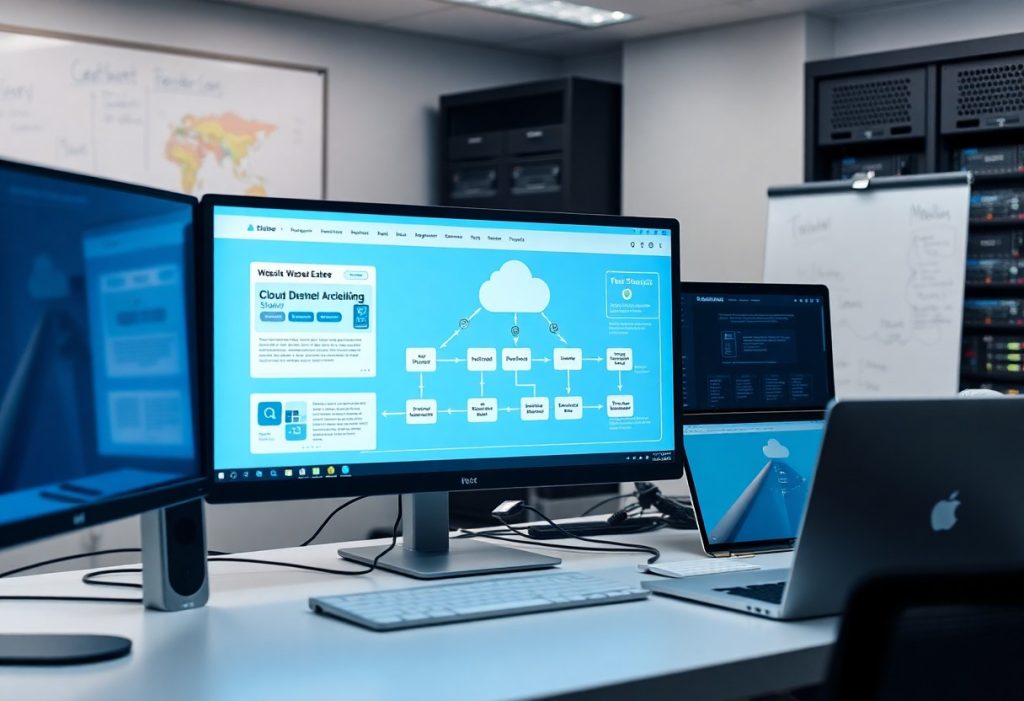

There’s a growing demand for digital platforms that adapt as your business grows, and a custom website portal can meet that need effectively. You can design a system tailored to your users, whether clients, employees, or partners, while ensuring it scales with increasing traffic and functionality. This guide walks you through each phase of building a portal that remains efficient, secure, and maintainable over time, using real-world considerations and proven development practices.
Identifying Different Types of Custom Portals
Custom portals serve distinct organizational functions depending on their audience and purpose. Some streamline internal workflows while others enhance external collaboration. Assume that your portal’s type directly influences its design, access controls, and integration requirements.
- Client-facing service portals
- Partner collaboration hubs
- Employee self-service systems
- Vendor and supplier management interfaces
- Member-exclusive community platforms
| Portal Type | Primary Function |
| Client Service Portal | Enable customers to track orders, submit support tickets, and access billing |
| Partner Collaboration Portal | Share project updates, contracts, and joint performance metrics |
| Employee Intranet Portal | Host HR documents, schedules, and internal communications |
| Vendor Management Portal | Streamline procurement, invoicing, and delivery tracking |
Client and Partner Facing Ecosystems
These portals strengthen external relationships by offering secure, branded environments where clients and partners access real-time data. You control what each group sees, ensuring compliance and reducing support overhead through self-service options.
Internal Employee Management Systems
Such systems centralize access to HR tools, project trackers, and internal resources. You simplify onboarding, reduce administrative bottlenecks, and maintain consistent communication across departments.
A mid-sized SaaS firm might deploy an internal portal integrating leave requests, performance reviews, and training modules into a single dashboard. Role-based permissions ensure employees only see relevant data while managers gain oversight without manual reporting. Integration with existing identity providers like Active Directory maintains security at scale.

Essential Factors for Ensuring System Scalability
Scalability depends on infrastructure, design, and integration choices made early in development. Select cloud platforms with auto-scaling capabilities and distributed databases to handle traffic spikes. Design with stateless services to simplify horizontal scaling. Integrate monitoring tools to track performance in real time. Assume that How to Build a Modern, Scalable Admin Portal: A Step-by- … will inform your architectural decisions.
- Auto-scaling cloud environments adjust resources dynamically
- Stateless services improve reliability during load changes
- Distributed databases reduce single points of failure
- Real-time monitoring detects bottlenecks before outages
Selecting Robust Cloud Infrastructure
Cloud providers like AWS, Google Cloud, and Azure offer scalable compute and storage with global availability. Choose services that support containerization and serverless options to reduce overhead. Prioritize regions with low latency to your user base. Assume that infrastructure must adapt as user demand evolves without manual intervention.
Modular Architecture and API Integration
Break your portal into independent services handling specific functions like authentication or billing. Use RESTful or GraphQL APIs to enable clear communication between modules. This separation allows teams to update features without disrupting the entire system. Assume that loosely coupled components will simplify long-term maintenance.
Each module operates as a self-contained unit with its own data store and logic layer. For example, a mid-sized SaaS firm might isolate user permissions in a dedicated service accessible via a secure internal API. Changes to the billing module won’t affect login flows when interfaces remain consistent. This isolation supports parallel development and targeted scaling where demand increases.
Evaluating the Pros and Cons of Custom Development
Building a custom website portal offers precise control over functionality and design, aligning closely with your operational needs. However, it also introduces complexity in development timelines and long-term upkeep. Weighing these factors helps determine whether a tailored solution fits your organization’s capacity and objectives.
| Pros | Cons |
| Full control over features and user experience | Higher initial development cost |
| Seamless integration with existing systems | Longer time to market compared to off-the-shelf tools |
| Scalable architecture designed for growth | Requires dedicated technical team for maintenance |
| Unique branding and differentiation | Increased risk of scope creep during development |
| Optimized performance for specific workflows | Ongoing security updates must be self-managed |
Strategic Advantages of Tailored Functionality
Your portal can address niche business processes that generic platforms overlook. A mid-sized SaaS firm, for example, automated client onboarding with custom approval trees and conditional form logic unavailable in standard tools. This specificity improves efficiency and reduces reliance on workarounds across departments.
Resource Demands and Maintenance Overhead
Custom development requires sustained investment in personnel and infrastructure. Unlike template-based solutions, every update, bug fix, and security patch depends on your team or contractors. A financial services portal, for instance, needed monthly audits and dedicated developers to maintain compliance and uptime.
Operating a custom portal means owning the full lifecycle, from debugging legacy code to planning feature rollouts. You’ll need developers familiar with your stack, a testing environment, and documentation practices that prevent knowledge silos. Without these, even minor changes risk system instability or extended downtime during critical operations.
Step-by-Step Implementation Framework
Building a scalable custom website portal requires a structured sequence that aligns technical execution with business objectives. The process moves from initial analysis to live deployment, with each phase informing the next to prevent rework and ensure long-term adaptability.
| Phase | Key Activities |
| Discovery and Requirement Mapping | Stakeholder interviews, user journey mapping, feature prioritization |
| Development, Testing, and Deployment | Agile sprints, QA cycles, staging validation, phased rollout |
Discovery and Requirement Mapping
You begin by identifying core user roles and their specific access needs. Documenting workflows and integration points ensures the portal supports real tasks, such as a university portal enabling students to register for courses while granting faculty access to grade submission systems.
Development, Testing, and Deployment
You translate approved requirements into functional components using modular architecture. Automated testing runs alongside development, catching bugs early, while a staging environment mirrors production to validate performance before a controlled release to users.
Development follows iterative cycles, allowing you to adjust features based on stakeholder feedback without derailing the timeline. Frontend and backend teams work in parallel, connected through well-defined APIs. Security checks are embedded in each sprint, not added at the end. A mid-sized SaaS firm might deploy new modules monthly, using feature flags to enable gradual user access and monitor system load.
Expert Tips for Optimizing Portal Performance
Speed and reliability define user satisfaction in any web portal. Focus on minimizing load times through efficient code, image optimization, and content delivery networks. Prioritize caching strategies and database indexing to reduce server response time. This continuous refinement ensures your portal remains responsive under growing demand. For deeper insights, refer to the Web Portal Development Guide: Leveraging Business ….
- Use lazy loading for images and non-critical resources
- Minify CSS, JavaScript, and HTML files
- Implement asynchronous loading for scripts
- Monitor performance with real-user metrics (RUM)
Prioritizing User Experience and Accessibility
Design your portal interface around intuitive navigation and consistent layout patterns. Ensure all interactive elements are keyboard accessible and support screen readers. Use semantic HTML and ARIA labels where necessary. This adherence to accessibility standards broadens your user base and meets compliance requirements.
Implementing Advanced Security Protocols
Secure data transmission using TLS 1.3 and enforce strict HTTPS policies across all portal endpoints. Implement multi-factor authentication and role-based access controls. Regularly update dependencies to patch known vulnerabilities. This layered defense strategy protects sensitive information from emerging threats.
- Enforce strong password policies and session timeouts
- Integrate intrusion detection and prevention systems (IDPS)
- Conduct regular penetration testing and code audits
- Apply security headers like Content Security Policy (CSP)
| Security Measure | Implementation Example |
| Authentication | OAuth 2.0 with MFA for user login |
| Data Protection | End-to-end encryption for stored user data |
| Threat Monitoring | Real-time log analysis using SIEM tools |
Adopting advanced security protocols requires ongoing vigilance. A mid-sized SaaS firm reduced breach attempts by enforcing automated security patching and continuous vulnerability scanning. This proactive stance limits exposure windows and strengthens trust with enterprise clients.
- Deploy web application firewalls (WAF) at the edge
- Use secure coding practices to prevent injection flaws
- Isolate critical services using micro-segmentation
- Log and audit all administrative actions
| Security Layer | Technology or Practice |
| Network Security | Firewall rules with zero-trust architecture |
| Application Security | Static and dynamic code analysis tools |
| Identity Management | Centralized IAM with single sign-on (SSO) |
Conclusion
You now have a clear path to building a scalable custom website portal tailored to your operational needs. From defining user roles to selecting modular architectures, each decision shapes long-term performance. A mid-sized SaaS firm, for instance, improved load times by 40% after integrating a microservices backend. Your portal’s success hinges on iterative testing, responsive design, and proactive security updates. Implement monitoring tools early to track traffic spikes and adjust resources dynamically. This foundation supports growth without compromising speed or user experience.

FAQ
Q: What infrastructure changes are necessary when scaling a custom portal from 1,000 to 100,000 users?
A: Moving from a small to large user base requires rethinking server architecture, database handling, and content delivery. A single server setup will not sustain high traffic, so adopting a load-balanced cluster across multiple availability zones is standard practice. Database replication with read-write splitting helps manage query volume, while implementing a CDN reduces latency for static assets. A mid-sized SaaS firm, for example, reduced page load times by 60% after migrating from a monolithic server to a containerized environment using Kubernetes for orchestration.
Q: How do role-based access controls (RBAC) impact the long-term maintenance of a custom portal?
A: RBAC streamlines permission management by grouping user actions into defined roles, such as editor, reviewer, or admin. This structure prevents ad-hoc permission assignments that become unmanageable at scale. A university portal serving faculty, students, and administrators used RBAC to reduce access-related support tickets by half within three months of launch. Over time, maintaining a clear role hierarchy allows teams to audit permissions efficiently and adapt to organizational changes without rewriting access logic.
Q: Can a custom portal integrate with legacy systems without compromising performance?
A: Yes, but integration must be handled through asynchronous communication and middleware layers. Direct database connections between a modern portal and outdated systems often create bottlenecks. Using message queues like RabbitMQ or Apache Kafka allows data to sync in the background without blocking user-facing operations. One healthcare provider successfully linked a patient portal to a 15-year-old billing system by deploying an API gateway that translated requests into compatible formats, maintaining sub-second response times for end users.