
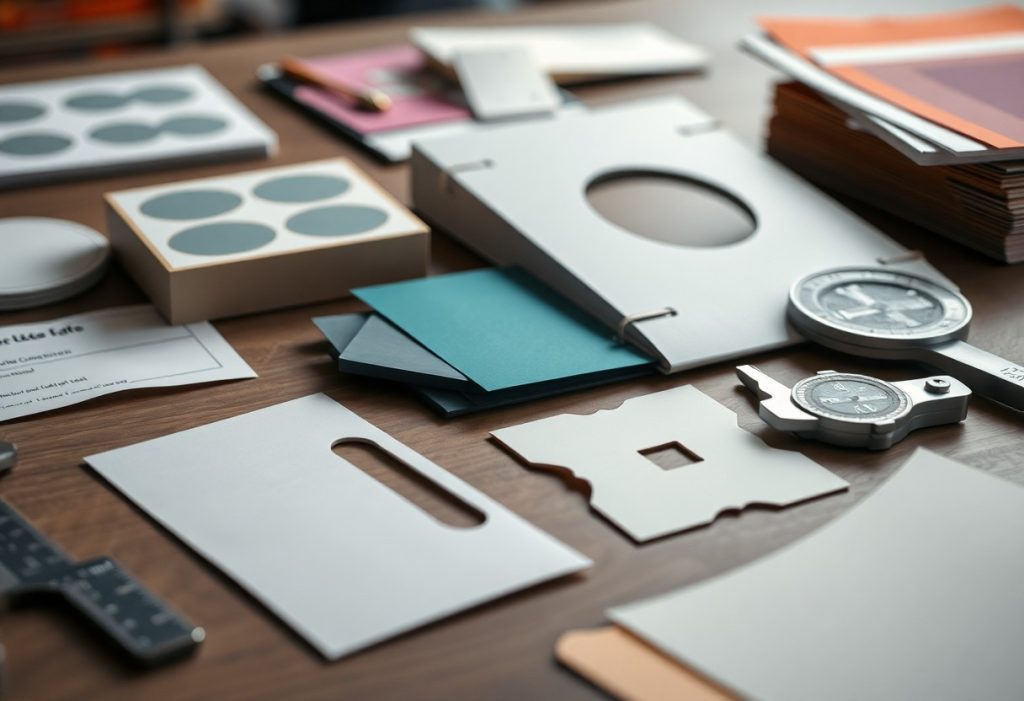
With precision shaping the difference between a forgettable package and one that commands attention, your choice of die cut style directly influences both functionality and perception. You need a method that aligns with your material, volume, and design intent, whether producing rigid boxes for a luxury skincare line or peelable labels for a mid-sized beverage brand. Each cutting technique brings distinct capabilities to the table.
Key Takeaways:
- A flatbed steel rule die is best suited for low-volume, high-precision jobs, such as packaging prototypes or specialty retail boxes, where intricate shapes justify longer setup times.
- Rotary cylinder dies excel in high-speed production runs, particularly for adhesive labels and flexible packaging, delivering consistent results at speeds exceeding several hundred feet per minute.
- Digital die cutting offers unmatched flexibility for short runs and on-demand customization, eliminating physical tooling altogether, making it ideal for a mid-sized SaaS firm producing variable marketing kits.
The Flatbed Steel
Rigid Plate Foundations
Flatbed steel dies rely on a solid steel rule bent and shaped to your design, embedded into a wooden or metal base. This construction delivers sharp, consistent cuts ideal for materials with moderate resistance like corrugated board or thick paperboard. The rigidity of the plate ensures dimensional accuracy across repeated use, making it reliable for structured packaging layouts. Tooling changes are straightforward, allowing quick swaps between designs on the same press.
Short Run Economy
A flatbed setup often proves cost-effective for short to mid-volume production runs. Initial tooling is less expensive than rotary dies, particularly for complex shapes requiring intricate steel rule bending. A mid-sized SaaS firm printing custom server rack labels might choose flatbed steel for 5,000-unit batches, balancing precision with budget constraints. Setup time remains manageable without the need for expensive engraved cylinders.
Tooling durability supports repeated short runs over months, especially when stored properly to prevent warping or blade damage. You can reuse the same die across seasonal campaigns or regional variants without degradation in cut quality, provided material thickness stays consistent. This longevity reduces per-unit costs over time, even without high-volume throughput.
The Rotary Cylinder
Rotary die cutting uses a cylindrical die that rotates against a counter-rotating roller, enabling continuous cutting action ideal for web-fed materials. This method excels in high-volume production environments where precision and speed are balanced without sacrificing edge quality. A mid-sized SaaS firm packaging subscription hardware kits might choose rotary dies for consistent, clean cuts across thousands of adhesive labels per hour.
High Speed Motion
Rotary systems operate at significantly faster line speeds than flatbed alternatives, often processing material at rates suitable for mass-market packaging runs. The continuous rotary motion reduces cycle time per cut, allowing uninterrupted production over extended periods. Converting operations for beverage can wraps frequently rely on this speed to meet aggressive distribution timelines.
Long Run Endurance
Hardened steel rotary dies maintain dimensional stability over millions of cycles, making them suitable for extended production without frequent tooling replacement. Their durable construction resists wear even when cutting abrasive substrates like coated paperboard or synthetic films. Consistent performance is maintained across shifts in high-demand print facilities.
Rotary dies are typically mounted in precision-guided housings that minimize lateral movement, reducing edge degradation over time. This mechanical stability ensures that the final cut remains true from the first to the millionth pass, especially critical in pharmaceutical blister packaging where dimensional accuracy affects product safety.
The Digital Blade
Cutting Without Dies
Modern digital cutters use high-precision blades guided by computer systems to shape materials without physical dies. You achieve clean, repeatable cuts on substrates like paper, vinyl, and thin plastics with minimal setup time. Complex geometries and tight tolerances are handled efficiently, making this method ideal for short runs and custom packaging prototypes. There is no need to store or maintain metal tooling, reducing overhead.
Rapid Sample Logic
Digital cutting accelerates prototyping by eliminating die fabrication delays. You can adjust designs instantly in software and produce a revised sample within minutes. A mid-sized SaaS firm developing retail packaging used this flexibility to test three structural variations in a single afternoon. Each iteration refined fold alignment and material stress points before mass production.
Speed here translates directly into design accuracy. You respond to client feedback or regulatory adjustments without restarting the tooling process. This agility supports iterative testing, where small changes in cut path or corner radius can be evaluated physically, not just in simulation. Physical validation at this pace reduces costly errors downstream.
Material Resistance
Material resistance directly influences your die cut’s precision and tool longevity. Different substrates respond uniquely under pressure and motion, requiring alignment between the die method and the material’s physical properties. A mismatch leads to frayed edges, inconsistent cuts, or excessive tool wear over time.
Fiber and Grain
Fibrous materials like paperboard or kraft stock follow a distinct grain direction, affecting how cleanly they release from the die. Cutting against the grain may result in rough edges or delamination, especially in multi-ply boards. You achieve smoother results by aligning the die path with the fiber orientation, reducing resistance and improving edge quality.
Polymer and Heat
Polymers such as PET or polypropylene react differently under mechanical stress, often requiring heat-assisted die cutting to prevent cracking. Cold cutting can cause microfractures, especially in thicker films, compromising structural integrity. Heat-treated blades or rotary systems with temperature control allow clean, burr-free separation.
Thermal energy softens the polymer at the point of contact, enabling the blade to slice rather than crush the material. You’ll notice sharper edges and reduced deformation when using heated dies on laminated or co-extruded films, particularly in packaging applications where seal integrity is critical.
The Cost of Entry
Upfront Tooling Debt
Creating custom steel dies requires a significant initial investment, often running into thousands of dollars depending on complexity. You pay for precision machining and hardened materials built to withstand repeated use. This cost is fixed regardless of production volume, making it harder to justify for short runs or prototypes. A mid-sized SaaS firm launching a limited-edition packaging design might find this barrier prohibitive without guaranteed market response.
Profit in Efficiency
Rotary tooling pays for itself over time through speed and consistency at scale. Once installed, it cuts hundreds of units per minute with minimal operator intervention. Waste drops due to tight tolerances, and downtime between jobs shrinks dramatically. For a beverage brand running weekly batches of 50,000 labeled bottles, the per-unit savings become measurable within months.
Automation compatibility further amplifies gains, as rotary systems integrate directly into existing conveyor and feeding mechanisms. Your production line maintains throughput without requiring additional labor for changeovers. Precision alignment reduces misfires, meaning fewer rejected units and lower material costs over extended runs. This sustained output defines long-term profitability in high-volume environments.
The Visual Edge
Sharp, intentional shapes command attention in a way standard packaging rarely achieves. Your product’s silhouette is often the first impression a customer forms, and die cut precision shapes that impression into recognition. A well-executed edge doesn’t just frame your product-it defines its identity on crowded shelves and digital displays alike.
Clean Line Precision
Accuracy in cutting ensures every unit matches the design exactly, batch after batch. A mid-sized SaaS firm distributing hardware kits relies on micro-accurate corners to align internal components during assembly. Even a 0.5mm deviation risks misalignment, increasing return rates and damaging brand trust over time.
Market Shelf Power
Unique contours make your product stand out when surrounded by uniform boxes. A beverage brand using a wave-shaped side cut saw a measurable increase in dwell time during in-store observations. Shoppers paused longer, drawn to the motion implied by the edge, then reached for it 30% more often than competitors’ angular rivals.
Distinctive shapes create instant recall, especially when repeated across product lines. A skincare line using a petal-inspired cut across serums and moisturizers built cohesive shelf presence, making restocking easier for retailers and recognition faster for repeat buyers. Consistency in form becomes a silent brand ambassador.
To wrap up
Choosing the right die cut style shapes both the function and perception of your product. Your selection influences production speed, material compatibility, and final aesthetics, whether you’re packaging a luxury cosmetic or a durable retail tag. A mid-sized SaaS firm using custom die cuts for direct mail campaigns may prioritize precision and speed, favoring rotary cylinder methods for high-volume runs.
You achieve the best results by aligning your design goals with the technical strengths of each cutting method. Flatbed steel dies accommodate complex shapes on thicker substrates, while digital blades offer flexibility for short, iterative print runs without physical tooling. Your decision ultimately reflects a balance between upfront investment and long-term output quality.
FAQ
Q: How do I decide between a flatbed steel rule die and a rotary cylinder die for my packaging project?
A: The choice hinges on production volume and design complexity. A flatbed steel rule die is ideal for low to medium runs, especially when working with thicker materials like corrugated board or rigid paperboard. It accommodates deeper cuts and embossing in a single pass, making it a go-to for specialty packaging such as gift boxes or display stands. Rotary cylinder dies, by contrast, are built for high-speed, continuous runs on flexible substrates like labels or folding cartons. They integrate seamlessly into web-fed printing lines, enabling precise registration and faster turnaround for large orders. A mid-sized SaaS firm producing 50,000 product boxes annually might start with a flatbed setup, while a beverage brand printing millions of label rolls would rely on rotary tooling.
Q: Can digital die cutting match the precision of traditional methods for intricate designs?
A: Digital die cutting excels in precision for complex, short-run jobs without the need for physical tooling. Using laser or oscillating blade technology, it reproduces fine details like lace-like patterns or interlocking shapes that would be difficult or costly to achieve with steel rule dies. A cosmetics brand launching a limited-edition perfume box with a filigree window, for example, can use digital cutting to prototype and produce the design in one step. While it may not yet match the throughput of rotary systems for mass production, its accuracy and flexibility make it a strong option for custom packaging, promotional items, or variable data-driven designs.
Q: Does the die cut style affect the structural integrity of the final product?
A: Yes, the cutting method influences both edge quality and material behavior. Steel rule dies can compress softer materials at the cut edge, potentially weakening fold lines if the blade dulls or the setup is misaligned. Rotary dies, with their rolling shear action, often produce cleaner edges on thin films and reduce fraying. Digital blades, particularly oscillating types, minimize lateral pressure, preserving the integrity of delicate substrates like foiled papers or laminated films. A toy manufacturer using heavy chipboard for puzzle pieces, for instance, might opt for a sharp, well-maintained steel rule die to ensure clean separation without edge deformation, while a pharmaceutical company printing blister pack backing would prioritize the clean, sealed edges from a rotary laser cut.