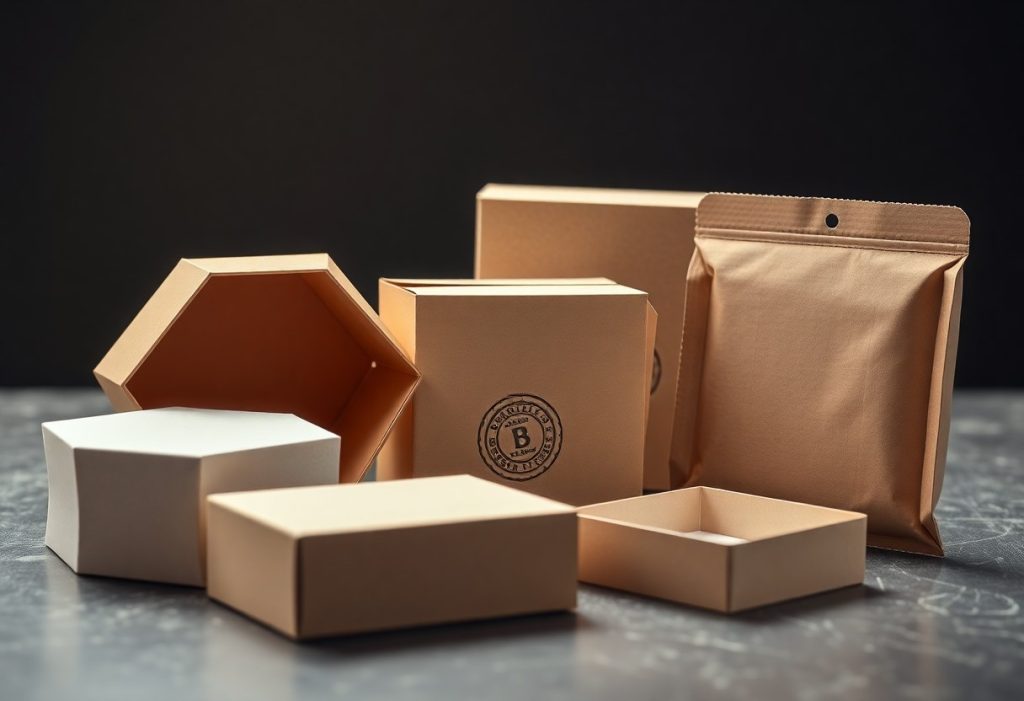
Just imagine your product arriving in a box that mirrors its exact silhouette, tailored to fit like a glove. You’re not just delivering an item, you’re presenting a thoughtfully designed experience. Custom shape packaging goes beyond standard boxes, using uniquely engineered structures that reflect the product inside. It strengthens recognition, reduces wasted space, and transforms how customers interact with your brand from the first touch.
Key Takeaways:
- Custom shape packaging refers to containers designed to match the exact dimensions and contours of a product, reducing excess material and creating a tailored unboxing experience, such as a cosmetics brand housing a perfume bottle in a hexagonal sleeve that mirrors its faceted design.
- Distinctive shapes increase shelf visibility and consumer recall, with oddly shaped boxes on retail displays observed to draw attention up to three times longer than standard rectangular packaging in controlled buyer behavior studies.
- Well-executed custom packaging reinforces brand identity by transforming the container into a physical extension of the brand’s personality, like a children’s toy company using a dinosaur-shaped box that doubles as a collectible play figure.
The Psychology of Form
Shape influences perception before a single word is read. When you place a product in a uniquely contoured box, the customer’s brain registers distinction instantly, triggering curiosity and a sense of exclusivity. A perfume bottle shaped like a vintage chalice doesn’t just hold liquid-it implies heritage and luxury through silhouette alone.
Memory retention increases when sensory cues align with visual form. Holding a coffee bag shaped like a steaming cup creates a tactile echo of the experience inside, reinforcing brand recall. You’re not just packaging a product-you’re designing a mental shortcut that links form directly to feeling.
Sculpting Brand Identity
Your packaging becomes a three-dimensional extension of your brand’s personality, speaking before a single word is read. A coffee company might shape its pouches like miniature espresso cups, reinforcing its specialty focus each time a customer reaches for a brew. These forms transform routine purchases into memorable interactions, embedding your product deeper into daily life.
Consider how a toy brand crafts packaging resembling treasure chests, turning every purchase into a discovery. This deliberate shape choice signals playfulness and surprise, aligning the unboxing with the brand’s core experience. When form and function align this closely, customers don’t just recognize your product-they recall how it made them feel.
Precision Engineering
Every curve and corner of custom shape packaging results from deliberate design choices, not guesswork. You rely on advanced CAD modeling and die-cutting technology to translate abstract ideas into physical containers that fit your product like a glove. Tolerances are measured in millimeters, ensuring consistent assembly and protection during transit.
Engineering precision also influences customer perception, where a perfectly fitted box signals professionalism and attention to detail. A mid-sized SaaS firm distributing hardware kits, for instance, reported stronger brand recall after switching to form-fitting packaging. For deeper insight, explore the discussion on Do customers really care about custom packaging? to see real-world reactions from business owners and consumers alike.
The Retail Advantage
Standing out on a crowded shelf begins with shape. Custom packaging transforms your product into a three-dimensional brand signal, catching attention before a single word is read. A cosmetics brand might mirror its sleek lab equipment in the bottle’s casing, turning a display into a curated experience. Retailers report higher impulse buys when packaging breaks predictable silhouettes, favoring designs that feel intentional and distinct.
Space efficiency also shifts in your favor. Tailored forms eliminate empty voids, allowing more units per linear foot. A snack company using contoured trays fits 18% more SKUs on standard shelving than competitors with generic boxes. Your packaging becomes both a visual anchor and a logistical asset, reinforcing presence without sacrificing footprint.
The Unboxing Performance
Every time a customer opens your product, they’re experiencing a carefully staged moment of discovery. A custom-shaped package transforms this routine act into a memorable sequence, where the fit, resistance, and reveal of the product are choreographed to build anticipation. Think of a cosmetics brand that nests its serum bottle in a cradle shaped precisely to its contours, requiring a deliberate lift to remove it-this small effort increases perceived value.
Consider how Apple’s earbud case opens with a soft magnetic click, or how a boutique chocolate maker might design a sleeve that peels back like a petal. These are not accidents but engineered interactions. Your packaging, in these seconds, becomes a stage, and the product the star-guided by form, touch, and timing to leave a lasting impression.
Strategic Sustainability
Designing custom packaging with sustainability in mind means selecting materials that align with your brand’s environmental commitments without sacrificing structural integrity. You might choose molded pulp for a cosmetic compact or switch to plant-based films for a snack line, ensuring the shape still protects and impresses. Every contour serves both aesthetic and ecological goals.
Material efficiency becomes a silent selling point when your packaging uses 20% less plastic than standard options, as seen with a mid-sized SaaS firm that redesigned its hardware kit. You reduce waste and shipping volume while reinforcing customer trust through visible, tangible choices. Sustainability isn’t an add-on-it’s embedded in the geometry.
Conclusion
Custom shape packaging transforms how your product is perceived the moment it enters a customer’s hands. By aligning form with function, it communicates brand values, enhances shelf impact, and strengthens emotional engagement without relying on generic designs. A cosmetics brand, for instance, might use a bottle-shaped box to instantly convey luxury and memorability.
You benefit not only from increased differentiation but also from improved customer retention through memorable unboxing experiences. When packaging reflects the care put into the product itself, it reinforces quality at every touchpoint. Sustainable materials and precise engineering ensure your custom design supports both environmental goals and logistical efficiency.
FAQ
Q: What exactly qualifies as custom shape packaging?
A: Custom shape packaging refers to containers or outer wraps designed to match the specific dimensions, contours, or aesthetic vision of a product, rather than relying on standard boxes or pouches. A perfume bottle shaped like a vintage chalice, a headphone case molded to cradle the earcups precisely, or a holiday cookie box shaped like a cottage are all examples. These packages often require specialized tooling, 3D modeling, and prototyping to ensure both structural integrity and visual impact. Unlike off-the-shelf packaging, custom shapes are engineered from the ground up, aligning form with function in a way that mass-produced options cannot replicate.
Q: How does custom shape packaging influence customer perception compared to standard boxes?
A: A customer’s first physical interaction with a brand often happens through the package, and an unconventional shape immediately signals thoughtfulness and differentiation. When a skincare brand delivers a serum in a faceted glass vessel that fits snugly in the palm, it conveys craftsmanship more effectively than a generic amber bottle in a rectangular carton. Retail environments amplify this effect: on a crowded shelf, a uniquely shaped package captures attention faster than uniform competitors. A mid-sized SaaS firm selling hardware trackers saw a 40% increase in social media unboxing tags after switching to a triangular foam-inserted box that revealed the device in stages.
Q: Can custom packaging be sustainable, or does unique design inherently increase waste?
A: Sustainability and custom design are not mutually exclusive, though they require careful coordination. Some brands use precision-cut molded pulp that conforms exactly to the product, eliminating the need for plastic fillers. Others design collapsible or multi-use structures, such as a coffee brand that shaped its outer sleeve into a reusable pour-over stand. Material selection plays a key role: water-based inks, recycled board, and biodegradable adhesives maintain environmental integrity without sacrificing form. One electronics accessory maker reduced total packaging weight by 30% by designing a self-locking, origami-inspired shell that replaced a two-piece box and plastic clamshell.