
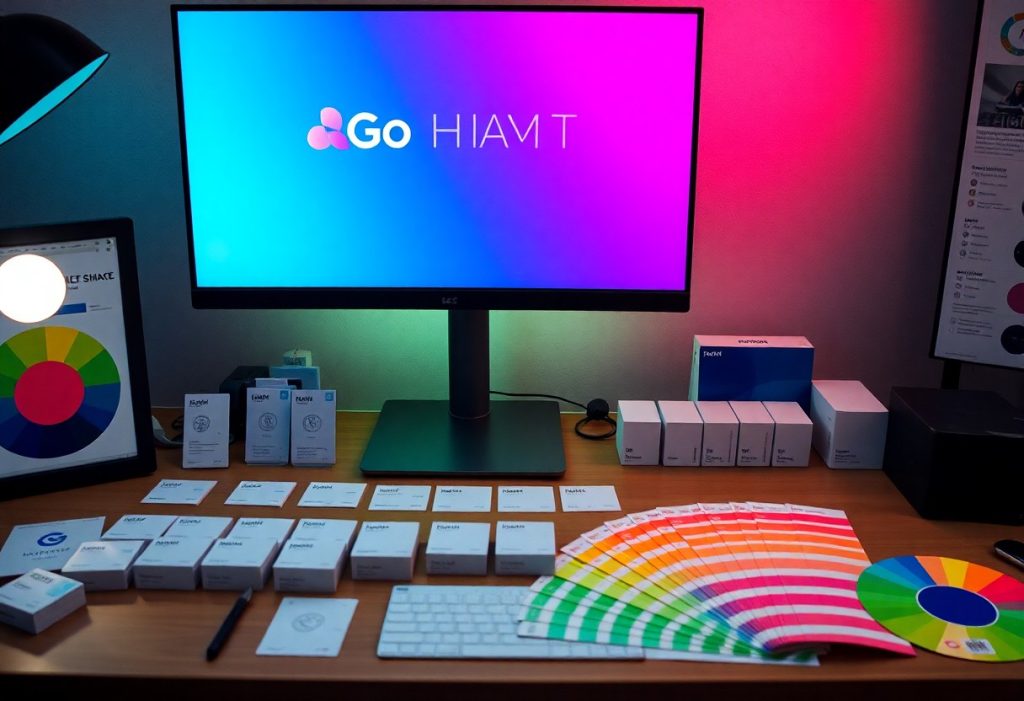
Just one color choice can shift how people see your brand. You respond to colors on a psychological level, often without realizing it. Red sparks urgency, blue builds trust, and yellow brings energy. When you design a logo, the colors you pick shape perception, influence emotions, and guide customer behavior-making color one of the most powerful tools in branding.
Key Takeaways:
- Color choices in logo design directly influence how consumers feel about a brand-warm tones like red and orange can convey energy and urgency, while cooler shades like blue and green often communicate trust and calm.
- Different industries tend to use specific color palettes to align with customer expectations; for example, tech companies frequently use blue to suggest reliability, while eco-friendly brands lean toward green to emphasize sustainability.
- Cultural context matters-colors carry different meanings across regions, so a logo that works in one country might send the wrong message in another without thoughtful adaptation.

The Primal Language of the Retina
Your eyes don’t just see color-they interpret it before your brain even registers the shape. Light hits the retina, and within milliseconds, signals race to the visual cortex, triggering emotional and physiological responses. This raw, instinctive reaction bypasses conscious thought, making color one of the fastest tools in branding.
Rapid Cognitive Processing
Color registers in under 100 milliseconds, shaping first impressions before a logo’s name is read. You’re more likely to trust a brand whose colors align with its message-blue for reliability, green for balance. Speed matters: your audience decides whether to engage before they even realize they’re making a choice.
Evolutionary Color Cues
Nature trained you to respond to color long before logos existed. Red signaled ripe fruit or danger, green meant safety and growth, blue pointed to clean water. These associations are embedded in your subconscious, influencing how you perceive a brand’s intent without you ever noticing.
Millions of years of survival shaped your brain’s response to color. A flash of red still triggers alertness because it once warned of fire or blood. Green calms you because it represented shelter and nourishment. When you see these hues in a logo, you’re not just observing design-you’re reacting to ancient instincts that still guide your decisions today.
Red and the Mechanics of Arousal
Red triggers a measurable rise in heart rate and blood pressure, activating the body’s sympathetic nervous system. You feel more alert, more present, when this color dominates a visual field. Logos using red tap into this primal response, creating a sense of urgency that influences decision-making in real time.
Metabolic Speed
Your metabolism subtly accelerates when exposed to red, a physiological echo of fight-or-flight readiness. This isn’t just psychological-studies show increased grip strength and reaction times in red-dominant environments. Brands use this to position themselves as dynamic, immediate, and action-oriented.
Aggressive Market Dominance
Red signals dominance in competitive markets, often chosen by brands aiming to lead rather than follow. You perceive red-labeled products as more intense, bold, and assertive. It’s no accident that major players in food, retail, and entertainment favor this hue.
Red’s association with dominance extends beyond perception into behavioral influence. When you see a red logo in a crowded marketplace, your attention locks on faster, giving that brand a split-second advantage. Companies like Coca-Cola and Netflix use red not just for visibility, but to project confidence and control, shaping how you interpret their market position. This color doesn’t ask for attention-it demands it.
Blue and the Blueprint of Reliability
Blue consistently emerges as a dominant choice for brands aiming to project trust and consistency. You associate this color with institutions that value dependability, from banks to tech platforms managing sensitive data. Its presence in logos signals a promise-quiet, steady, and enduring.
When you see blue in a logo, you’re more likely to perceive the brand as responsible and in control. This isn’t accidental; it reflects intentional design choices rooted in psychological response. Blue doesn’t shout-it reassures.
Institutional Stability
You trust banks, insurance companies, and government agencies because they often use blue in their branding. This color aligns with structure, order, and long-term commitment. It subtly tells you the organization values consistency over flash.
Organizations rooted in service and security lean into blue because it minimizes perceived risk. You feel safer sharing personal information with a blue logo than a bright red one. That quiet confidence is no coincidence-it’s design with purpose.
Serenity in Commerce
You’re more likely to complete a purchase when the interface feels calm and collected. Brands in healthcare, wellness, and digital services use soft blues to create a sense of peace amid transactions. The color reduces friction in moments of decision.
Even in fast-moving apps or online platforms, blue conveys a steady hand. You don’t feel rushed or pressured-it feels like the brand is on your side. That emotional ease is why so many choose blue for customer-facing experiences.
Consider how healthcare providers use light blue in their logos and websites-it’s not just about cleanliness, but emotional safety. You respond to that tone because it lowers your guard without lowering standards. In commerce, where trust is currency, serenity becomes a competitive advantage. Blue delivers it quietly, consistently, and without spectacle.

Yellow and the Spark of Anticipation
Yellow triggers mental stimulation and signals optimism, making it a strategic choice when you want to project energy and forward-thinking. It captures attention without the intensity of red, instead offering a sense of warmth and approachability. According to The Psychology of Logo Color in How Consumers View Your …, brands using yellow often aim to inspire innovation and cheerfulness in their audience.
Dopamine Responses
Yellow stimulates the brain’s reward system, prompting quick emotional reactions tied to pleasure and expectation. You experience a subtle surge of dopamine when encountering this hue, especially in branding linked to speed or instant gratification. Fast-food chains use it to create a sense of urgency and joy, making decisions feel rewarding in the moment.
High Visibility Tactics
Yellow stands out in crowded environments, making it ideal for brands needing instant recognition. You’ll often see it used in signage, delivery vehicles, and digital alerts because it registers quickly in peripheral vision. Its brightness ensures your brand remains visible even at a glance.
Brands like Snapchat and IKEA use yellow to dominate visual space without appearing aggressive. This hue works especially well in urban settings or digital platforms where competition for attention is high. By pairing yellow with strong contrast, you amplify legibility and recall, ensuring your logo cuts through visual noise and leaves a lasting impression.
Green and the Profit of Nature
Green ties directly to nature, evoking images of forests, fields, and fresh growth. You associate it with sustainability, health, and renewal-qualities increasingly valued in modern consumers. Brands in organic, eco-friendly, or outdoor industries use green to visually align with these ideals.
Its calming effect also reduces perceived risk, making it effective for financial services emphasizing steady returns. When used thoughtfully, green doesn’t just decorate-it communicates a promise of balance and long-term thinking.
Growth Symbolism
Green speaks to life’s natural cycles, mirroring how living things expand and evolve. You see it in sprouting leaves and thriving ecosystems, making it a natural fit for brands focused on progress and development.
Startups and educational platforms often use green to suggest momentum and potential. It reassures you that growth isn’t just possible-it’s already happening.
Ethical Signaling
Green quietly signals responsibility, especially when paired with clean design and natural imagery. You’re more likely to trust a brand that visually commits to environmental or social values.
This color becomes a subtle pledge-your choice reflects care not just for quality, but for consequences. Ethical brands use green not as decoration, but as a declaration.
When you see green in a logo for a food, skincare, or energy company, it often implies transparency and accountability. It’s not just about looking natural-it’s about acting that way too. You respond to this authenticity, and studies show it influences loyalty and purchasing decisions, especially among environmentally conscious audiences.
The Cultural Filter of Vision
Color carries meaning far beyond aesthetics, shaped heavily by cultural context. What feels energetic in one region may signal danger or mourning in another, altering how your logo is received across borders.
Your brand’s colors speak a silent language, one that shifts with local traditions and beliefs. Ignoring these nuances risks miscommunication, even alienation, in markets where symbolism runs deep.
Localized Symbolism
Red energizes consumers in the U.S., often tied to sales and urgency, but in parts of Asia, it represents luck and celebration. Choosing it for your logo isn’t just a design decision-it’s a cultural statement.
White signifies purity in Western weddings, yet appears in funerals across many East Asian cultures. Your color choices must reflect these distinctions to resonate authentically with local audiences.
Global Identity Shifts
Globalization has blurred some cultural lines, allowing certain color associations to evolve. Brands like Coca-Cola and McDonald’s maintain red worldwide, turning it into a universal signal of familiarity.
You now have the power to shape perception, not just follow tradition. Consistent use of color across regions can redefine meanings over time, creating new shared understandings.
As audiences interact with global brands daily, repeated exposure recalibrates emotional responses to color. A shade once tied to local tradition can, through sustained international presence, take on corporate identity over cultural origin. You’re not just selecting a hue-you’re participating in a slow, global shift in visual language, where repetition builds recognition that eventually outweighs regional differences.
Summing up
With these considerations, you understand how color choices directly shape how people perceive your brand. Colors influence emotions, signal values, and create instant associations-red can convey energy, while blue often suggests trust. Your logo’s color doesn’t just decorate-it communicates.
You shape first impressions within seconds, and color is a powerful tool in that moment. A well-chosen palette aligns with your brand’s personality and resonates with your audience. Choose wisely, because every hue sends a message.
FAQ
Q: How does color influence the way people perceive a brand’s personality?
A: Color directly shapes how consumers interpret a brand’s character. A tech company using blue often appears trustworthy and reliable, while a fitness brand using bright red may seem energetic and bold. People form opinions about a logo within seconds, and color accounts for up to 60% of that initial judgment. Warm tones like orange and yellow suggest enthusiasm and creativity, making them popular with youth-focused brands. Cool colors like green and purple communicate calm or luxury, commonly seen in wellness or premium products. The emotional associations tied to each hue guide how a brand is received before a single word is read.
Q: Can the same color mean different things in different cultures?
A: Yes, cultural context changes how colors are interpreted. In Western countries, white often represents purity and is used in weddings, but in some Asian cultures, it’s linked to mourning and funerals. Red can signal danger or excitement in the U.S., yet in China, it stands for luck and prosperity. A global brand must consider these differences when designing a logo. Choosing red for a financial app might attract attention in North America, but could carry unintended meanings in other regions. Designers research local symbolism to ensure the color supports the brand’s message everywhere it appears.
Q: Why do some brands use black or neutral colors in their logos?
A: Black, gray, and neutral tones convey sophistication, simplicity, and timelessness. Luxury brands like Chanel or Nike use black to emphasize elegance and strength. These colors create strong contrast, making logos easy to recognize across different backgrounds and sizes. A minimalist palette also helps a brand feel modern and focused. Neutral colors don’t draw attention to themselves but instead highlight the design and name, allowing the brand’s actions and reputation to take center stage. This approach works well for companies aiming for a clean, professional image.