
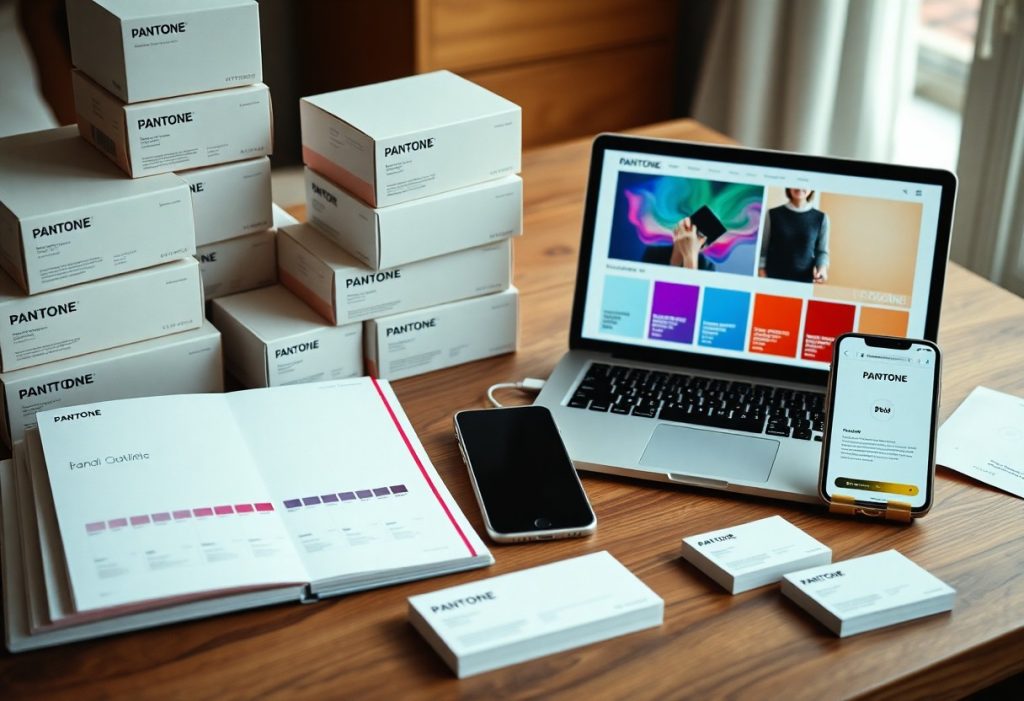
There’s power in consistency when shaping how customers see your brand. You control that perception at every touchpoint, from product packaging to your website’s design. Align colors, fonts, tone, and messaging so your audience recognizes you instantly, no matter where they interact with you.
Key Takeaways:
- A consistent brand experience starts with a clear visual identity-use the same colors, fonts, and logo treatments across packaging, website, and all customer touchpoints to build recognition.
- Brand voice should match in tone and style whether on a product label or a website blog; this creates a unified and trustworthy impression.
- Aligning user experience with brand values-like simplicity, sustainability, or innovation-ensures customers feel the same way no matter how they interact with the brand.
Defining Core Brand Identity Factors
Your brand’s foundation rests on clear identity elements that shape perception.
- Define your mission and primary values
- Identify your target audience’s core needs
- Clarify what sets you apart from competitors
- Establish brand personality traits
Thou build recognition and trust when every touchpoint reflects these anchors consistently.
Establishing a unified color palette and typography
Color and type shape immediate impressions. Choose a limited palette that reflects your brand’s mood and use it uniformly across packaging, website, and marketing. Pair it with one or two typefaces that enhance readability and character. Consistency here strengthens recall and signals professionalism without saying a word.
Developing a consistent brand voice across all media
Tone influences how your message is received. Whether casual, authoritative, or playful, your voice should match your brand’s personality in every email, social post, or product description. Aligning this tone across platforms ensures customers feel they’re engaging with the same entity, no matter where they encounter you.
When your brand speaks, it should sound like itself-every time. This means training your team on tone guidelines and creating templates that reflect your voice. Whether announcing a new product or responding to a customer, the language should feel familiar. Over time, this predictability builds intimacy and credibility, turning casual buyers into loyal advocates who recognize you not just by your logo, but by how you speak.
How-to Align Physical Packaging with Digital Aesthetics
Consistency between your product’s packaging and your website strengthens recognition and trust. Match color palettes, typography, and graphic elements across both formats so customers experience a unified brand identity whether they’re shopping online or holding the product in hand.
Translating tactile elements into high-resolution web visuals
Texture influences perception, even online. Use macro photography to capture the fine details of embossing, matte finishes, or material grain, letting your website convey the same sensory appeal as the physical package.
Integrating digital bridges for a seamless unboxing transition
Your packaging can extend the experience beyond the box. Include QR codes or short URLs that lead to welcome videos, usage tips, or exclusive content, turning unboxing into an interactive brand moment.
QR codes printed discreetly on packaging invite customers into a curated digital journey the moment they open the box. These links can direct to personalized thank-you messages, behind-the-scenes stories, or tutorials that deepen engagement. When the physical and digital feel like parts of the same story, your brand becomes more memorable and meaningful.
Essential Tips for Maintaining Visual Continuity
- Stick to a defined color palette across all platforms
- Use consistent typography for headlines and body text
- Align logo placement and sizing in every format
- Apply the same design motifs from packaging to web
Knowing how each visual element reflects your brand strengthens recognition and trust across every customer touchpoint.
Implementing a comprehensive cross-platform style guide
A well-structured style guide ensures your team applies colors, fonts, and layouts the same way whether designing a label or a landing page. You reduce guesswork and maintain a unified look no matter where your brand appears.
Auditing imagery to ensure quality from print to screen
Image resolution and color rendering vary between print and digital formats. You need to review all visuals to confirm they look sharp and consistent, whether viewed on a box or a mobile device.
Print materials demand high-resolution files with CMYK color profiles, while websites rely on optimized RGB images for faster loading. You risk brand confusion if a photo looks grainy online or washed out on packaging. Regularly test how your imagery translates across mediums, and keep an updated library of approved versions for each platform. This attention to detail keeps your brand looking professional everywhere it appears.
Key Factors in Synchronizing Multi-Channel Messaging
- Align visual elements across packaging, website, and ads
- Use consistent tone and voice in all customer communications
- Ensure brand colors and fonts are uniform everywhere
- Train teams to follow brand guidelines without deviation
Any effort to unify your brand experience starts with recognizing that customers interact with your business across multiple platforms. Learn How to Build a Consistent Brand Identity Through Packaging to strengthen recognition at every stage.
Aligning marketing copy between labels and landing pages
Your product label promises a solution, and your landing page must deliver the same message in tone and intent. Matching language builds trust and reduces confusion, making it easier for customers to move from discovery to purchase without second-guessing your brand’s credibility.
Ensuring value propositions remain identical at every touchpoint
You communicate your brand’s worth every time a customer sees your packaging, clicks an ad, or reads an email. When the core message shifts, even slightly, confidence erodes. Consistency reinforces reliability.
When a customer picks up your product in-store after seeing an online ad, they should recognize the same benefits, phrasing, and promise. Slight variations in how you present your value-like using “saves time” on packaging but “boosts efficiency” online-create subtle dissonance. Over time, this weakens brand recall and decision-making speed. Any strong brand avoids this by locking in one clear value statement and repeating it across every channel without deviation.
How-to Optimize the User Journey from Box to Browser
Every interaction with your brand shapes perception, starting with the unboxing and continuing online. You can extend the tactile satisfaction of opening your product into a digital experience that feels just as intentional. Guide customers smoothly from physical to virtual by aligning design, tone, and ease of use.
Mirroring the physical emotional experience on the website
Your customer feels delight when they unbox your product-the care in packaging, the textures, the small surprises. Recreate that feeling online with warm visuals, thoughtful microcopy, and animations that echo the same joy. Let your website evoke the same emotions the box first sparked.
Streamlining navigation to reflect product simplicity
Your product does one thing beautifully-your website should too. Limit menu options to core actions that guide users toward understanding and using your product. Clear labels and minimal choices reduce friction, making it easy to find what matters most.
Simplicity in design isn’t about removing features-it’s about removing confusion. When your navigation follows the same logic as your product’s function, users don’t have to think. They just do. This alignment builds confidence, reduces hesitation, and keeps them moving forward without distraction.
Practical Tips for Scaling Brand Integrity
- Centralize brand assets in an easily accessible digital library
- Develop clear, visual brand guidelines for all teams
- Use templates for recurring marketing materials
- Assign brand guardianship to key team members
This ensures your brand remains cohesive no matter how fast you grow.
Automating asset management for design consistency
You streamline access and updates by using digital asset management tools that organize logos, fonts, and templates in one secure location. Automated version control prevents outdated files from being used. This reduces errors and keeps every touchpoint aligned with current standards.
Training internal teams on brand standards and execution
You equip employees with the knowledge to represent the brand accurately through structured onboarding and regular refreshers. Clear examples and real-world applications make guidelines easier to follow. This builds confidence in day-to-day decision-making across departments.
Consistent brand execution starts with understanding, not memorization. When team members grasp the reasoning behind color choices, tone of voice, and layout rules, they apply them more naturally. Host interactive workshops where marketing, sales, and customer service practice using brand materials in realistic scenarios. Rotate brand champions in each department to maintain accountability and encourage peer-led learning. This ongoing engagement turns abstract guidelines into everyday habits.
To wrap up
Your brand experience shapes how customers perceive you at every touchpoint. From packaging to website, consistency builds trust and recognition. You control the narrative through cohesive design, tone, and messaging. Align every element to reflect your brand’s identity clearly and confidently.
FAQ
Q: How can packaging design support a consistent brand experience across different customer touchpoints?
A: Packaging design acts as a physical representation of your brand every time a customer interacts with your product. When colors, typography, logo placement, and tone of voice on the packaging match those used on your website, social media, and advertising, customers recognize your brand instantly. For example, if your website uses soft pastel tones and hand-drawn illustrations, your packaging should reflect the same aesthetic. This visual harmony builds trust because customers feel they’re engaging with the same brand, whether online or holding a product in their hands. Consistency in design elements reduces confusion and strengthens brand recall over time.
Q: Why should my website reflect the same messaging and style as my product packaging?
A: Your website is often the first digital interaction a customer has with your brand, just as packaging is their first physical encounter. If the language, imagery, and overall feel differ drastically between the two, it creates a disjointed experience. A customer who loves your minimalist packaging might feel misled if your website is cluttered and uses a completely different tone. Matching the style-such as using the same font, color palette, and voice-ensures a smooth transition from discovery to purchase. It tells a unified story about who your brand is, what it values, and what customers can expect.
Q: What steps can I take to ensure brand consistency from packaging to website during a rebrand?
A: Start by defining your brand’s core identity-its mission, personality, color scheme, fonts, and voice. Create a brand style guide that documents these elements and share it with everyone involved in packaging production and web development. Update your packaging design first, then align your website to reflect those changes, ensuring product photos on the site show the new packaging. Test the experience by walking through the customer journey: from seeing an ad, visiting the website, ordering, and receiving the product. If each step feels like part of the same story, your rebrand is working. Regular audits of both digital and physical materials help maintain alignment over time.