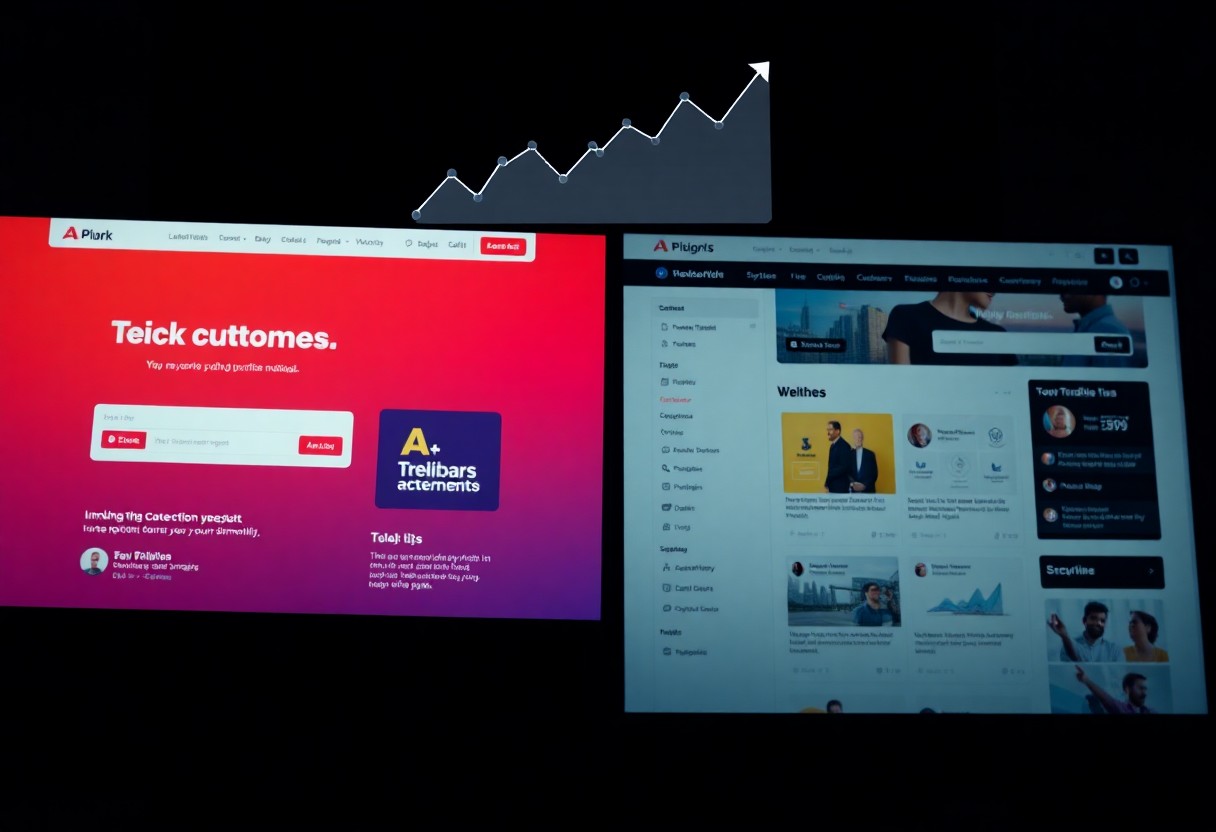

Many businesses struggle to determine whether a landing page or a full website will yield better results for their specific goals. Understanding the differences between these two online platforms can significantly impact your marketing effectiveness. This post will help you evaluate which option aligns with your objectives and enhances your conversion rates. For valuable insights, check out Landing pages vs. websites: How to know when to use ….
Key Takeaways:
- Landing pages are designed for specific campaigns, focusing on a single call to action, which often drives higher conversion rates compared to general websites.
- Websites provide comprehensive information about a business, enhancing brand identity and engagement but may dilute specific marketing goals.
- Combining both landing pages and websites can optimize marketing efforts, leveraging the strengths of each for improved overall results.
Understanding Landing Pages
Landing pages serve a specific function in your marketing arsenal, designed to convert visitors into leads or customers. Unlike a full website, a landing page is typically focused on a single objective, guiding users toward a specific action that aligns with your campaign goals. This makes them an indispensable tool for focused marketing strategies.
Definition and Purpose
A landing page is a standalone web page created for a marketing or advertising campaign. Its primary purpose is to drive traffic toward a single action, such as signing up for a newsletter or making a purchase. In essence, it’s a tailored environment aimed at maximizing conversion rates and achieving specific marketing outcomes.
Key Features
Several key features define effective landing pages, enhancing their ability to boost conversions. A strong headline, engaging visuals, clear call-to-action (CTA), and concise content are crucial elements that work together to attract and retain visitors. These components help create a compelling user experience that motivates action.
- Focused call-to-action (CTA)
- Minimal distractions
- High-quality visuals
- Responsive design for mobile compatibility
- Trust signals, such as testimonials or guarantees
After assessing these features, it’s evident how each element plays a vital role in enhancing user engagement. By ensuring a focused CTA, you direct visitors to their next step, increasing the likelihood of conversions. Minimal distractions allow users to concentrate solely on the desired action, creating a seamless experience.
Key Features
In addition to the initial key features, consider the importance of A/B testing and analytics for optimizing landing pages. Continuous data evaluation allows you to refine elements like headlines, color schemes, and CTA placement, ensuring maximum effectiveness. This level of detail can significantly impact your overall performance.
- A/B testing for performance measurement
- Integrated analytics for tracking user behavior
- Fast loading times to reduce bounce rates
- Clear and concise messaging
- Social proof through customer feedback
After implementing these advanced features, you can refine your landing pages based on real-time data. This iterative approach ensures that every element is tailored to the preferences and behaviors of your target audience, significantly enhancing conversion opportunities and ROI over time.
Exploring Websites
Definition and Purpose
Websites are comprehensive platforms designed to provide extensive information about your business, products, or services. They serve various functions, including establishing online presence, showcasing brand identity, and facilitating customer engagement through multiple pages.
Key Features
Key features of websites play a vital role in delivering a seamless user experience and driving engagement. A well-rounded website should be designed with necessary elements that cater to your audience’s needs.
- User-friendly navigation
- Responsive design
- Optimized for search engines
- Multimedia elements (images, videos)
- Contact and lead generation forms
- Blog or resource section
Knowing these features enhances your ability to create a website that not only attracts visitors but also retains them effectively. A balanced site encourages users to explore more content, ultimately leading to increased conversions.
Additional Key Features
- Fast loading speed
- Security features (SSL certificates)
- Social media integration
- Content management system (CMS) capabilities
- Analytical tools for performance tracking
Knowing these additional key features helps ensure your website is not only functional but also competitive in the digital landscape. By implementing these attributes, you can enhance user satisfaction, improve SEO performance, and foster long-term customer relationships.
Comparing Landing Pages and Websites
| Landing Pages | Websites |
|---|---|
| Focus on a single conversion goal. | Provide broader information and navigation options. |
| Higher conversion rates (average 5-15%). | Lower conversion rates (usually below 5%). |
| Minimal distractions for users. | Many links and pages can lead to distraction. |
| Short, targeted content. | More extensive and varied content. |
Conversion Rates
Your landing pages typically yield significantly higher conversion rates compared to standard websites. Landing pages are crafted with a singular focus in mind, funneling visitors towards one specific action. This streamlined approach can result in conversion rates ranging from 5% to 15%, surging well above the general average found on regular websites, where conversions often hover around 1-3%.
User Experience
User experience on landing pages is distinctively streamlined to drive action. These pages eliminate excess information and distractions, focusing solely on the user’s next steps. This focused design ensures that visitors can easily navigate towards the desired goal without the overwhelm that often accompanies traditional website navigation.
User experience is the cornerstone of effective landing pages. By simplifying navigation and concentrating on a single call to action, you guide your visitors clearly and purposefully. For example, a well-structured landing page will feature a prominent button with contrasting colors, concise messaging, and visuals that reinforce the call to action. Users are less likely to feel confusion or frustration, which enhances their likelihood of converting. The absence of multiple links or distractions found on websites enables you to maintain visitors’ attention where it matters most.
Use Cases for Landing Pages
Landing pages are versatile tools that can significantly enhance your marketing efforts across various scenarios. They provide focused messaging and calls-to-action aimed at achieving specific goals, making them ideal for direct response marketing. By tailoring these pages to your audience’s needs, you can increase conversion rates and drive profitable customer actions effectively.
Marketing Campaigns
For marketing campaigns, landing pages can be tailored to highlight promotional offers or specific events. By presenting a clear value proposition and minimizing distractions, you guide visitors toward completing desired actions, such as signing up for a newsletter or making a purchase. This focused approach can raise engagement levels and conversion rates dramatically.
Product Launches
When launching a new product, a dedicated landing page can create buzz and excitement. Utilize it to share key features, benefits, and special offers that entice potential customers. This targeted strategy allows you to gauge interest, collect leads, and drive immediate sales while also building a tailored marketing funnel.
A dedicated landing page for product launches not only showcases the new offering but also aligns with your promotional strategies. Incorporate countdown timers for urgency, engaging visuals, and testimonials to build credibility. Using analytics to track performance during the launch will provide insights into customer behavior, enabling you to refine future campaigns and maximize results. By optimizing your landing page based on real-time feedback, you strengthen your marketing approach and create lasting customer connections.
Use Cases for Websites
Websites serve versatile roles for businesses, catering to broader objectives beyond mere lead generation. They can showcase your brand, provide comprehensive information about products or services, and act as a hub for customer interaction, information sharing, and engagement. A well-designed website can drive traffic, educate users, and build trust over time, making it an vital tool in your digital strategy.
Brand Building
Your website is a powerful instrument for brand building, enabling you to convey your identity and values effectively. It acts as the first point of contact for many potential customers, so having a clear, cohesive design and messaging can enhance recognition and trust. Through blog posts, visuals, and about pages, you create an engaging narrative that connects with your audience on a deeper level.
E-commerce Solutions
Well-constructed e-commerce websites provide a seamless shopping experience, allowing customers to browse, evaluate, and purchase your products effortlessly. Integrating features like secure payment gateways, customer reviews, and detailed product descriptions can significantly enhance user experience and increase conversion rates.
In the e-commerce landscape, statistics show that 54% of consumers prioritize websites that are easy to navigate. Optimizing your site for mobile users and employing strategies like personalized recommendations can further boost sales. According to recent studies, businesses that use personalized e-commerce solutions see up to a 20% increase in sales. Additionally, integrating various shipping options and customer support channels creates a more comprehensive shopping experience, leading to higher customer satisfaction and retention rates.
Making the Right Choice for Your Business
Determining whether a landing page or a full-fledged website is better for your business involves careful consideration of your unique objectives, audience, and resources. It’s necessary to weigh factors like marketing strategies, conversion goals, and customer engagement to make an informed decision that aligns with your vision.
Assessing Business Goals
Your business goals play a pivotal role in this decision. If your primary aim is to drive specific actions, such as lead generation or sales, a landing page can be more effective due to its focused design and message. Conversely, if you require a broader online presence to showcase multiple products or services, a website provides the necessary breadth.
Budget Considerations
Budget is a vital element when deciding between a landing page and a website. A landing page is typically less expensive to create and maintain, allowing you to allocate funds towards targeted marketing campaigns. In contrast, a comprehensive website may involve higher initial costs and ongoing expenses for hosting, design, and updates, but it can serve a wider purpose long-term.
For instance, the average cost for building a simple landing page can range from $500 to $2,000, while a robust website often starts at around $3,000 and can go well beyond $10,000 depending on features. Balancing your upfront investment with long-term returns is necessary; if your primary focus is on immediate conversions, a cost-effective landing page may give you the best ROI. However, if you’re planning a sustained online strategy, investing in a full website can ultimately offer more extensive capabilities and flexibility to grow your brand.
Final Words
Drawing together the insights on landing pages versus websites, your choice should align with your specific business goals. If your focus is on generating leads and conversions, a well-optimized landing page can yield better results by providing a targeted experience. Conversely, a comprehensive website offers broader information and long-term engagement for visitors. Evaluate your objectives and understand that each serves a distinct purpose; choosing the right one can significantly impact your business’s online success.
Q: What is the primary difference between a landing page and a website?
A: A landing page is a standalone web page designed specifically for a marketing or advertising campaign. Its purpose is to capture leads or drive conversions for a specific offer. In contrast, a website is a collection of web pages that provides comprehensive information about a business, its products, and services. Websites typically have multiple sections, including an about page, contact information, and various service offerings.
Q: Which option is better for driving conversions?
A: Landing pages are often more effective for driving conversions because they focus on a single goal or action. They eliminate distractions, guiding visitors to take specific actions like signing up for a newsletter or making a purchase. Websites, while informative, can dilute focus with multiple navigation options that may lead visitors away from the intended purpose.
Q: How do the costs compare between creating a landing page and a website?
A: Creating a landing page is generally less expensive than building a full website. Landing pages require limited design and development work, focusing on a specific campaign. Websites involve creating multiple pages and features, which can increase the overall development and maintenance costs significantly.